


Climate Economics The Paris Agreement – an overview
- Apr 21, 2017
- 8 min read
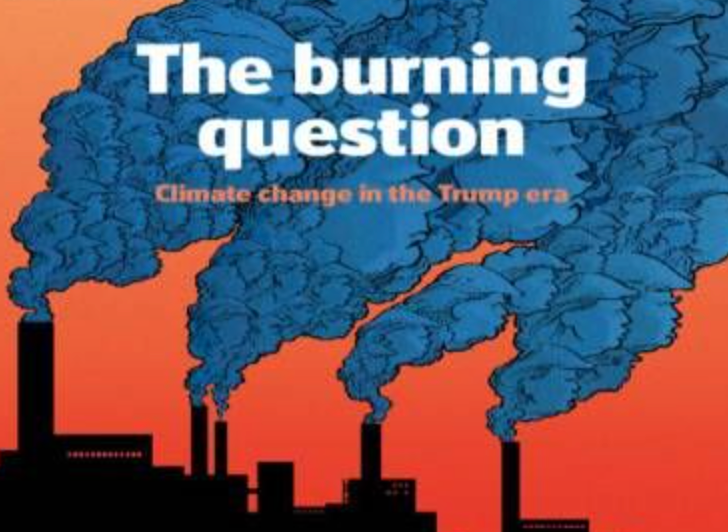
The 16-page international agreement is hailed as a historic document and environmental agreement in modern human history.
That night of December 12, 2015 in Le Bourget, a suburb in northeast metropolitan Paris, where the agreement was adopted in the closing plenary of the 21st Conference of the Parties (CoP21) to the United Nations Framework Agreement on Climate Change (UNFCCC) was regarded as the defining moment for post-2020 international cooperation on climate change.
After four years of marathon-like negotiations, the world purportedly can celebrate that nations of the world finally have an agreement to address climate change, billed as the biggest challenge to human survival.
That is only partially correct. It maybe historic but it is not necessarily the best deal for the planet, human societies and particularly for developing countries.
To understand how countries came to adopt the Paris Agreement, one needs to go back to the ‘birth’ of the UNFCCC.
Rio Summit and Kyoto Protocol
While a large part of the world’s population viewed the climate change convention as one that addresses an environmental problem stemming from pollution caused by the combustion of fossil fuels, the solution to this pollution has repercussions beyond the environment.
Governments (that represent the countries in this international negotiation) are concerned that they would lose the competitive advantage (with political implication) if they have to switch their energy systems to a more expensive technology. As such the climate change debate takes on an economic dimension.
And this reality is reflected in the Convention’s text. Article 2 which deals with the objective states that:
The ultimate objective of this Convention and any related legal instruments that the Conference of the Parties may adopt is to achieve, in accordance with the relevant provisions of the Convention, stabilization of greenhouse gas concentrations in the atmosphere at a level that would prevent
dangerous anthropogenic interference with the climate system.
Such a level should be achieved within a time-frame sufficient to allow ecosystems to adapt naturally to climate change, to ensure that food production is not threatened and to enable
economic development to proceed in a sustainable manner.
In 1992 at the Rio Earth Summit, the UNFCCC was adopted. Nations agreed that they will come together to combat climate change but they also agreed that actions taken would allow economies to grow in a sustainable manner.
That consideration is particularly important for countries in the developing world that are in various stages of development and aspires to eradicate poverty and be a developed country. While recognising that a carbon-based economic system is the underlying causes of global warming that leads to climate change, countries acknowledged that weaning away from a ‘carbon economy’ takes time. There is also acknowledgement that industrialised economies with their historical emissions were largely responsible for the effects of climate change being experienced and therefore they have a bigger responsibility, thus giving birth to the fundamental principle of common but differentiated responsibilities (CBDR).
To ‘compensate’ for their historical responsibilities, it was further agreed that rich nations will provide financial resources and transfer of technology.
The first emission cut treaty, Kyoto Protocol, embodies these principles and provisions of the Convention where developed countries were obliged to reduce their emission by 5% from 1990 level in phase 1 from 2008 to 2012.
However, even before phase 1 came into force in 2005, industrialised countries already have second thoughts about the Convention. Historical emissions and historical responsibilities are becoming untenable for them as they see that many developing countries’ emissions are rising.
They began to hatch plans to reinterpret the Convention and mount campaigns to ‘kill’ the Kyoto Protocol. They wanted a treaty where all nations come onboard to cut their emissions regardless of their economic development stages and technological capacity level, in a bid to erase their historical responsibilities.
The clash came to a head at the Copenhagen CoP in 2009 where it became clear that rich nations are planning to abandon the Kyoto Protocol and forcing a new ‘universal’ treaty onto developing countries. Tremendous pressure was mounted on emerging big emitters particularly China and India, in the run-up to Copenhagen and caused huge division among the developing countries.
Rich countries with their dominant position in these multilateral negotiation fora dictated the direction and undermined the transparent, democratic and country-driven process. They cornered the emerging emitters bloc called BASIC (Brazil, South Africa, India and China) and piled on the pressure at crunch time. China and India held the CBDR line in a ‘small group’ negotiation orchestrated by then US President Barack Obama. The CoP over-ran its official schedule and without an agreement in sight, the group settled for the Copenhagen Accord that undermined ambition in future actions. However, the Accord, which was not negotiated by all Parties, was rejected when it was presented at the plenary, resulting in the infamous collapse.
The Road to Paris
Following the disastrous Copenhagen summit, the goodwill and cooperative spirit of Rio Summit were severely tested. It took nearly two years of healing and reconciliatory meetings to mend the multilateral system before Parties took a decision at CoP17 at Durban, South Africa to launch a new round of negotiation.
The process to develop the global treaty was undertaken by the Ad hoc Working Group of the Durban Platform for Enhanced Action (ADP).
Rich nations never gave up on their plans to shift their responsibilities onto the emerging economies. They tried all means and arguments to dilute the fundamental principle of CBDR. And they preyed on the insecurities and exploited the poor capacity of the weaker among the developing countries.
The cracks among the developing countries block grew larger as emissions level of emerging countries continue to climb while the impacts of climate change such as sea level rise are already felt by the small island developing states where more than half of them are also least developed countries.
Meanwhile, the contentious issues in reaching a global treaty ostensibly for post-2020 became clearer – it surrounds the phrase called ‘means of implementation’ – referring to financial resources, transfer of technology and capacity-building.
As developing countries concurred that they will take on emission reduction but they insisted that they will do so based on the principle of CBDR and the key provision of Article 4.7 – The extent to which developing country Parties will effectively implement their commitments under the Convention will depend on the effective implementation by developed country Parties of their commitments under the Convention related to financial resources and transfer of technology and will take fully into account that economic and social development and poverty eradication are the first and overriding priorities of the developing country Parties.
Although the Copenhagen Accord was not adopted by the CoP, the stated US$100bil financial assistance (in the Accord) became the basis for negotiation on finance despite studies showing that the costs run into trillions. In terms of technology transfer, the impasse over the issue of intellectual property rights remained. Developed countries refused to discuss solution to overcome IPR to enable affordable access to climate-friendly technologies.
On the road to Paris, the Convention principles and provisions were further diluted with each CoP outcomes. A group of developing countries, accounting for more than half of the world’s populations, formed an alliance called the Like-Minded Developing Countries (LMDC) and succeeded in defending the key principles of the Convention considerably.
Some key ‘historic’ aspects of the Paris Agreement
Temperature goal - since Article 2 of the Convention was crafted, the safe/acceptable ‘level’, is now politically determined to be well below 2°C. Parties also agreed to pursue efforts to limit the temperature increase to 1.5°C above pre-industrial levels
However, it is also recognised that based on the intended climate action plans submitted by more than 150 countries before Paris CoP, ‘do not fall within least-cost 2°C scenarios but rather lead to a projected level of 55Gt in 2030 (translating to more than 4°C)’.
To address this concern, Parties agreed to conduct a stocktake in 2023 to assess the collective progress of the implementation of the Paris Agreement including the mitigation efforts.
CBDR survived but diluted – given the relentless attacks on this fundamental principle, the LMDC managed to keep CBDR alive in the Paris Agreement as reflected in Article 2.2 – This Agreement will be implemented to reflect equity and the principle of common but differentiated responsibilities and respective capabilities, in the light of different national circumstances.
How is it diluted? Under the Kyoto Protocol regime, developed countries assumed their historical responsibilities and adopted a top-down system where an aggregated cut is determined and the burden is distributed among themselves but under the Paris regime, the CBDR principle is applied ‘in the light of different national circumstances’. Developed country Parties, technically, could cite national circumstance to not have higher ambition and take on deeper cuts.
This does not bode well to the planet which requires rapid and deep cuts in the near future to have any chance of pursuing temperature increase below 1.5°C.
Article 8 for loss and damage – as the impacts of climate change grew more serious and where adaptation is no longer viable, countries would enter the realm of loss and damage. This could manifest in loss of territories (eg low-lying areas that are inundated by sea water or a whole island swallowed by rising sea water), loss of agricultural output (eg severe droughts or floods) or communities that are devastated by climate-induced typhoons.
Although this was hailed as a breakthrough after years of negotiation fighting for this provision by developing countries who are suffering from the disproportional impacts of climate change, the provision is severely hampered by a trade-off clause which says that this article ‘does not involve or provide a basis for any liability or compensation’.
However, many island states when ratifying the Paris Agreement, did so with a caveat that they are not giving up on liabilities.
Post-Paris
The Trump’s factor – as the second largest emitter of greenhouse gas today and the world’s largest economy, the United States remains a very important country in terms of mitigation and provider of climate finance.
A Trump’s administration that is staffed by climate deniers is a big concern for many countries that had signed up to the Paris Agreement. From calling climate change a hoax created by China to rolling back the climate action plans of Obama, the United States may not even live up to its climate action plan submitted before Paris and which is to cut its emission by 26% from 2005 level by 2025.
It remains unclear if Trump will pull the United State from the Paris Agreement and abandon the multilateral process. Even if it chose to quit the Paris Agreement, it will still have to serve out the 4 years exit plan. Hence, the emerging concern is that the United States will use the opportunity to weaken the outcome of the negotiation on the rulebooks that is taking place post-Paris until at least 2018.
It is worth noting that the United States has escaped international emission reduction obligation thus far. It did not sign up to the Kyoto Protocol although it negotiated the rulebook and was the key architect in introducing the cap and trade system which resulted in the flexible mechanism called Clean Development Mechanism (CDM) which enable developed countries to offset their emissions with carbon credit generated by CDM projects that are implemented in developing countries.
The Convention’s financial health is also in great despair with the cuts in contribution from the United States which account for nearly 20% of the Convention budget. The Trump’s climate advisors are already hatching plans to use the US’s financial contribution in a manner that would ensure US companies benefit such as the use of carbon capture and storage technologies. If the US succeed with this plan, emission reduction plans will be severely affected.
It remain to be seen if other developed countries especially United States’ close allies like Japan and Canada will follow the example of Trump and lower their commitment to the implementation of Paris Agreement not only from the mitigation aspect but also provision of finance and technology development and transfer.
The leadership of China – in contrast to the United States, the world’s number one emitter, has reiterated its commitment to international cooperation to curb greenhouse gas emissions. In fact, it has even contributed voluntarily to financial assistance through South-South Cooperation to help other developing countries in the implementation of their climate actions.
The Chinese remained committed to its climate action plan submitted before Paris CoP which is to peak its emissions around 2030 and achieved 60% and 65% of emission intensity reduction from 2005 level.
Comments